The RURAL GENERALIST CARE MODEL
A new approach to primary care — built around where you live.
Primary care plays a central role in how people experience the health system. It is often the first place people turn for support, guidance, and ongoing care.
In rural and northern regions, however, delivering that care consistently has become increasingly complex. Physician shortages, growing demand, and the realities of geography have made it difficult to ensure stable, continuous access for every community.
The Rural Generalist Care model (RGC) represents a new approach; one that is designed specifically for the Kenora region and surrounding First Nations communities. It reflects a shared commitment among health partners, physicians, and communities to build a system that is more connected, more reliable, and better aligned with how people live.
At its core, this model is grounded in a set of guiding principles: continuity, team-based care, safety, accessibility, and equity. These principles shape not only where care is delivered, but how it is experienced.
Find out more about the RGC:
WHAT HAS CHANGED?
The most important change is not where care exists, but how it is organized and connected.
In the past, primary care was often structured around individual physicians or small clinic groups. While this worked in many cases, it also meant that access could vary significantly depending on location, provider availability, or temporary gaps in coverage. Patients sometimes travelled between communities to find care, even when services existed closer to home.
The RGC model introduces a more coordinated structure. Physicians now work as part of a broader, regionally connected system. Care is planned and delivered across organizations and communities, rather than within isolated sites. This allows the system to respond more effectively to demand, reduce gaps in service, and ensure that care remains available across the region.
For patients, this may mean a shift in experience. Care may not always come from a single provider in a single location. Instead, it is supported by a connected network of providers and teams who work together, share information, and ensure continuity over time.
WHAT ARE THE BENEFITS?
The benefits of this model are best understood through how it changes the experience of care over time.
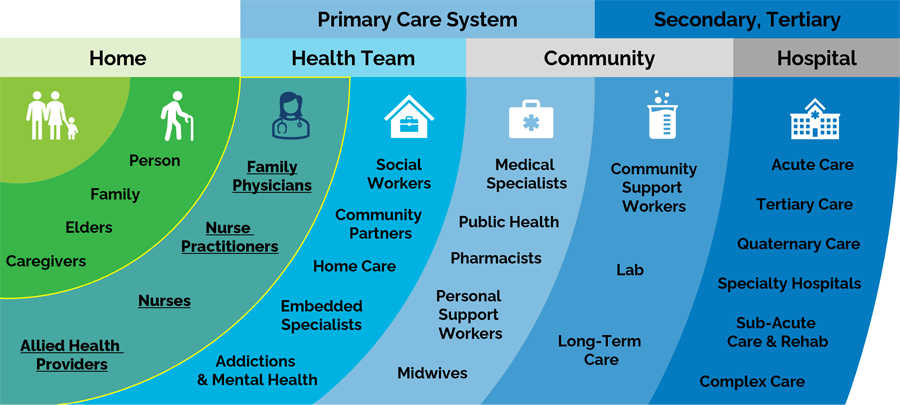
For patients, the most meaningful improvement is consistency. Care becomes more reliable, not because any one provider is always available, but because the system itself is designed to ensure coverage and continuity. Patients are supported by a network rather than relying on a single point of access.
For communities, the model strengthens local services. By coordinating care across the region, it helps ensure that clinics and care teams remain viable and supported. It also reduces the strain that can occur when demand is concentrated in a small number of locations.
For physicians, the model creates a more sustainable working environment. Workloads are shared more evenly, administrative burdens are reduced, and providers are able to focus more of their time on patient care. This is a key factor in improving recruitment and retention over the long term.
Electronic Medical Records: The Secret to Success
One of the most important enablers of this model is how information moves between providers.
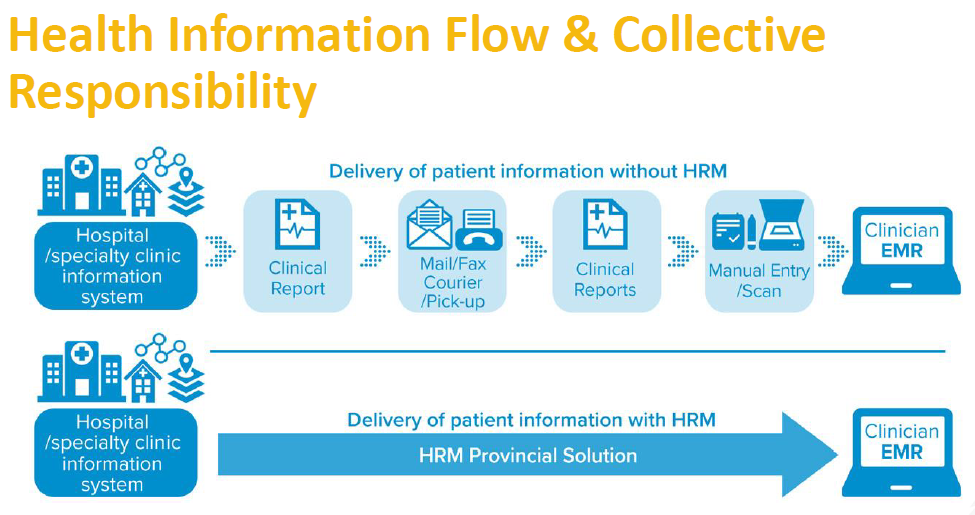
Historically, patient information often moved slowly and inconsistently, through fax, paper records, or manual entry. This created gaps, delays, and added pressure on both patients and providers. The information flow diagram below illustrates how fragmented this process could be without integrated systems — and shows how, under the new model, it can be so much more efficient.
In the RGC model, shared Electronic Medical Record (EMR) systems and provincial tools allow information to move more seamlessly between care settings. Providers can access relevant health information when it is needed, whether a patient is seen in a clinic, hospital, or another community.
This does more than improve efficiency. It supports safer care, better decision-making, and a more consistent patient experience. It also enables a key feature of the model: care can be delivered across different locations without losing continuity, because the information that supports that care travels with the patient.
Finding More Physicians
 Recruitment remains an important part of strengthening the system — but the focus has shifted from simply filling vacancies to building a sustainable workforce.
The RGC model makes the region more attractive to physicians by offering a structure that reflects the realities of modern practice. It provides opportunities to work as part of a team, to practice across a broad scope of care, and to be supported by a coordinated system rather than working in isolation.
Just as importantly, it creates a model where physicians can build long-term careers in the region. By improving workload balance, and reducing burnout,
We have a dedicated team working on recruiting more doctors every day to our region…and the RGC model will likely make their job easier!
LONGITUDINAL CARE — consistency in care, wherever you are.
Longitudinal care is a central concept in this model. It refers to care that is continuous, relationship-based, and responsive to a person’s health needs over time.
Longitudinal care is not about a single visit or issue. It is about understanding a person’s full health history, building trust over time, and supporting their health across different stages of life.
In practice, this means that care is:
- informed by a complete picture of the patient
- coordinated across providers and services
- focused on prevention and long-term outcomes
In the RGC model, longitudinal care is delivered through teams. While patients may not always see the same provider at every visit, their care remains connected. Information is shared, plans are aligned, and the overall experience remains consistent.
This approach allows care to remain both personal and flexible, ensuring access while maintaining continuity. It also is the answer to the question, “How do I get a family doctor?” Under the new model, you don’t get a doctor — you get a team.

LOOKING AHEAD
The Rural Generalist Council model represents a significant step forward in how care is delivered in the Kenora region. It reflects a shared commitment to:
- continuity of care,
- equitable access,
- culturally grounded and community-informed services, and
- a system that works together, across organizations and communities.
As the model continues to evolve, its purpose remains clear: To ensure that people receive the care they need, supported by a system that is connected, stable, and built around the communities it serves.
Frequently Asked Questions
What is the Rural Generalist Care model?
The Rural Generalist Care model is a new, locally developed healthcare model designed to meet the unique needs of the Kenora region and surrounding communities. Its goal is to ensure access to both primary and emergency care for everyone living in the All Nations Health Partners Ontario Health Team (ANHP OHT) region, through a new system of physician compensation. The goals of the RGC model are:
- Ensure access to primary and emergency care for every resident in the ANHP region;
- Address challenges of physician shortages and service gaps;
- Ensure fair distribution of physician resources to support the LWDH emergency department;
- Support physician recruitment and retention;
- Address physician burnout; and
- Reduce the administrative load for physicians, in order to create more time for patient care.
The RGC model helps ensure that people across the region can access a full range of healthcare services, close to home. It supports primary care in both Indigenous and non-Indigenous communities across the region.
Who is involved in the RGC model?
The RGC initiative has been led by local physicians, supported by Kenora Chiefs Advisory — Ogimaawabiitong (KCA), Lake of the Woods District Hospital (LWDH), Sunset Country Family Health Team (SCFHT) and Waasegiizhig Nanaandawe’iyewigamig (WNHAC).
The development of the RGC model has brought together physicians, Chiefs, Elders, First Nations, Indigenous and non-Indigenous primary care providers, and the hospital. It also has the support of municipal leaders, the Ontario Medical Association (OMA), and the Ministry of Health (MOH).
The implementation of the model is being driven by the RGC Management Committee, consisting of several partner executive leads and local physicians, with the support of the Physician Association Council and the Rural Generalist Council.
Why has the RGC model been developed?
Many people in our region don’t have a primary care provider — or they struggle to access timely or complete care. The RGC model was developed to help close these gaps.
It will improve access to primary care, help health professionals work together more effectively, and make it easier for people to get the care they need close to home. It’s a key step toward building a better, more responsive health system for everyone.
It also will reduce the administrative burden on physicians, through centralized systems and a new compensation model, freeing up more time for them to provide care — and encouraging physicians to stay in the region.
How is Indigenous knowledge and culture included in care?
Indigenous ways of knowing and healing are central to the RGC model. The care teams work with Elders, Knowledge Keepers, and Traditional Healers to ensure care reflects the culture, values, and priorities of Indigenous communities, alongside Western medicine.
How is the RGC model working to successfully achieve its goals?
The RGC model is focused on three primary areas of work:
- Simplified physician compensation;
- Recruitment and retention efforts; and
- Administrative supports and operation of clinics on behalf of physicians (call centre, scheduling, billing, building operations).
What does the Rural Generalist Care model do for me?
For area residents that don’t have a primary care provider, the RGC model maximizes the opportunity for you to get the care you need more easily.
Through the primary care providers in our communities (KCA, SCFHT and WNHAC), you can be seen by a primary care provider (even if you aren’t currently attached to one) for care, who can, when needed, refer you to healthcare providers who get to know you and your health history, working together to support your overall wellbeing.
If I don’t have a doctor, how do I get to see a primary care provider?
If you don’t have a primary care provider, you may be able to access one of the limited “unattached patient” appointments offered each week. For the Kenora urban clinics, contact the SCFHT call centre at (807) 468-6321 ext. 5.
Please note that these appointments can only be scheduled up to five days in advance, and availability is limited. If no appointments are available when you call, you may need to try again on another day.
For KCA clinic appointments, please call (807) 467-8144. For WNHAC clinic appointments, call 1-888-MYWNHAC.
Will you be my doctor?
The Ministry of Health has set a goal of ensuring every person in Ontario is connected to primary care by 2029. In the Kenora region, the RGC model is designed to help reach that goal in the future by linking residents to a team of local primary care providers.
As the model evolves, this will eventually mean that, while you may not always see the same doctor, you’ll have access to a provider who can see your medical history, coordinate care, and ensure your health needs are met.
Will I lose my doctor or nurse practitioner?
No. If you already have a primary care provider, you can continue seeing them as usual. And if your doctor were to retire or leave the community, your medical records stay with your primary care team, and you can still be seen by another provider.
I Need Primary Care. Where Do I Start?
If you do not currently have a physician or primary care provider,
you can access the primary care team in your community today.
Contact your community medical centre from the list below,
who can help you access primary care in the Kenora area:
First Nations Community Medical Centres:
- Animakee Wa Zhing (Regina Bay 37A)
- Animakee Wa Zhing (Windigo Island 37B)
- Asubpeeschoseewagong (Grassy Narrows)
- Netaawgonebiik (Whitefish Bay) Health Services Health Centre
- Niisaachewan Anishinaabe Nation (Dalles)
- Northwest Angle 33 First Nation (Dogpaw) Medical Centre
- Northwest Angle 33 First Nation (Angle Inlet) Medical Centre
- Shoal Lake 40 Medical Centre
- Shoal Lake 39 Isobel Pinesse Memorial Health Centre
- Wabaseemoong (Whitedog) Independent Nations Health Centre
- Obashkaandagaang (Washagamis Bay) First Nation Health Office
- Wauzhushk Onigum (Rat Portage) Community Medical Clinic
Kenora Area Medical Centres:
- Sunset Country Family Health Team
- Waasegiizhig Nanaandawe’Iyewigamig Health Access Centre
Provincial Online/Telehealth Primary Care Resources:
If you need health advice, have minor health issues or need to speak to a health professional outside of regular hours, there are a number of resources available to you. In emergency situations, always call 911.
Health811 is a free, secure and confidential service you can call or access online 24 hours a day, seven days a week to get health advice from a registered nurse or find health services or information. Speak with a Registered Nurse for health advice and guidance on next steps.
Phone: Dial 811
Online: Health811 Website
Norwest Region Virtual Care Clinic collaborates with healthcare providers to ensure that patients who have minor health issues and do not have a primary care provider or access to one in a timely manner can access timely and efficient care. The clinic provides remote consultations, treatments and referrals, making healthcare more accessible and convenient for everyone across Northwest Ontario.
Phone: 1-800-407-3483
Online: Norwest Region Virtual Care Clinic Website
Health Care Connect is a provincial service that helps individuals find a family doctor or nurse practitioner in their community.
Phone: 1-800-445-1822
Online: Health Care Connect Website
